The Australian Government has officially announced the Permanent Migration Program planning levels 2026-27, maintaining the overall cap at 185,000 places.
While the total number of places and the approximate 70:30 split between Skilled and Family programs remain unchanged from last year, there are massive shifts in exactly how these places are being distributed among the different visa subclasses.
Whether you are an employer looking to sponsor staff, an offshore highly-skilled worker, or a temporary resident already living in Australia, here is everything you need to know about the 2026-27 migration changes.
The most significant takeaway from this announcement is the government’s intense focus on onshore applicants.
Of the 185,000 total places, 129,590 places (70%) are specifically prioritized for migrants already living and working in Australia. The remaining 55,110 offshore places will be strictly targeted at high-skilled migrants who can address Australia’s long-term skill shortages and boost productivity.
This strategy aims to provide timely transitions to permanent residency for those already contributing to the Australian economy. Importantly, because these applicants are already inside the country, granting them permanent residency minimizes the program’s impact on Australia’s Net Overseas Migration (NOM)—which has already fallen by more than 40% from its 2023 peak.
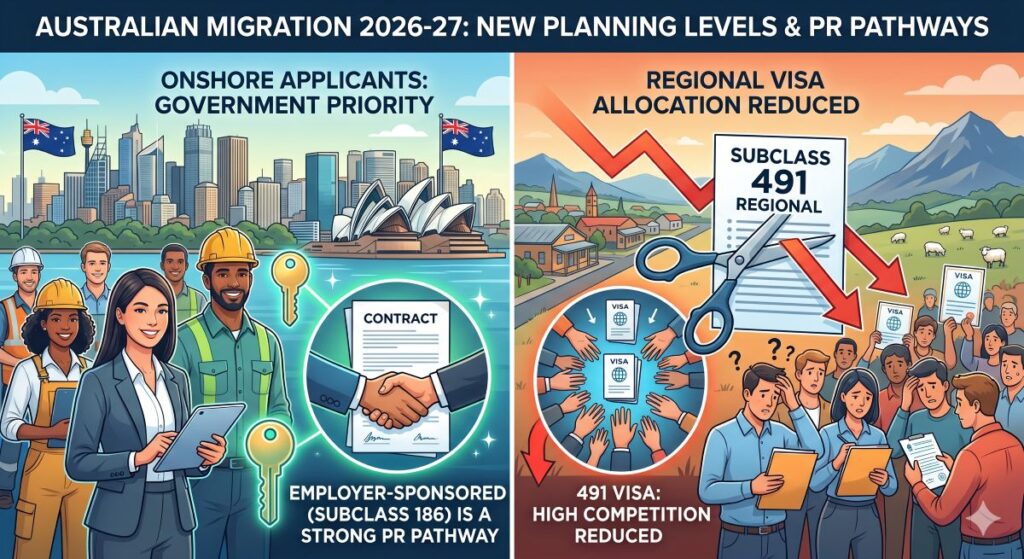
The Skilled Migration Program makes up approximately 71% of the total intake. It is designed to fill critical skill shortages in sectors like health, ICT, engineering, construction, and education.
Here is how the allocations have shifted for the upcoming financial year:
Making up 28% of the total intake, the Family Program allows Australians to reunite with their loved ones.
Note: Partner and Child visas are demand-driven programs, meaning the government prioritizes family reunification and processes these without a hard legal cap (the numbers provided are indicative for planning and resourcing purposes).
(There are also 300 places allocated for Special Eligibility, which includes permanent residents returning to Australia).
With changing allocations, highly competitive state nomination lists, and a heavy focus on onshore applicants, having a strategic migration plan is more important than ever.
Contact Us Today to assess your eligibility and find the fastest pathway to permanent residency under the new 2026-27 planning levels.