
Getting a visa refusal or cancellation notice from the Department of Home Affairs is stressful, but you often have the right to challenge it through the Administrative Review Tribunal (ART). Historically, applicants assumed this review process guaranteed a face-to-face hearing where they could plead their case.
However, recent updates to Australian migration legislation have introduced a major shift: the ART can now finalize specific visa appeals entirely “on the papers.”
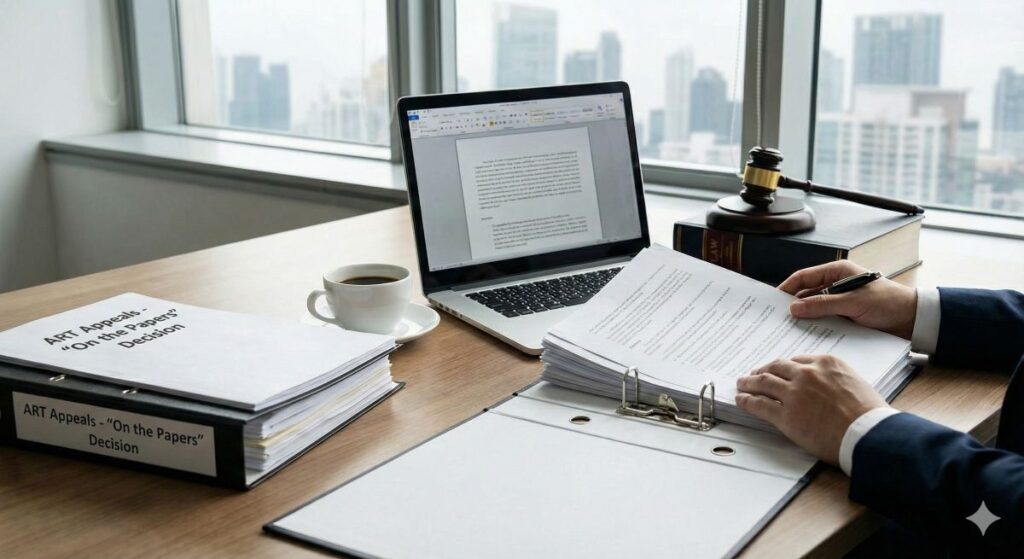
When the ART decides a case “on the papers,” it means the Tribunal Member makes their final ruling based exclusively on your written documentation. There is no in-person, video, or telephone hearing.
You are now required to upload all necessary supporting evidences and documents with comprehensive written submissions at the time of submitting your ART Appeal application. The Tribunal will then evaluate your entire file and issue a written decision.
Australia’s migration review system has struggled with severe backlogs, leaving applicants in limbo for months or even years. Transitioning to paper-based decisions is a strategic move designed to drastically cut down wait times for applicants and optimize the Tribunal’s operational resources and reserve formal, in-person hearings for the most complicated cases.
If your documents are disorganized, incomplete, or fail to address the exact legal reasons for your visa refusal, the ART will likely uphold the Department’s decision. Your paperwork must be airtight, professionally drafted, and directly tackle the migration laws relevant to your visa subclass.
This legislative update primarily targets temporary visa appeals to streamline the review pipeline. For instance, the law now explicitly permits paper-based decisions for certain student visa refusals, and regulations may expand this to other temporary visa subclasses in the future.
No. The ART still holds the authority to call a formal hearing if a paper-based review isn’t sufficient to ensure fairness.
The transition toward “on the papers” decisions fundamentally changes how migrants must approach the ART. The key takeaway is simple: your written evidence must be absolutely perfect from day one.
If you are facing a visa refusal, it is highly recommended that you seek professional guidance immediately to ensure your written case is presented clearly, accurately, and persuasively.
If the ART affirms the Department’s decision (meaning you lose the appeal), your options become very limited. You will generally be given a strict timeframe to either depart Australia or, if you believe the ART made a legal error, lodge an appeal with the Federal Circuit and Family Court.
You are legally allowed to represent yourself. But many cases are now being decided “on the papers” without a hearing, your success depends entirely on writing complex, legally sound submissions and formatting evidence perfectly. A registered migration expert knows exactly what the Tribunal Members are looking for and how to structure your argument to give you the highest chance of a successful outcome.
the Administrative Review Tribunal (ART) (formerly AAT) application fee for most migration and visa refusal reviews is $3,727 AUD
Yes. If your appeal is decided in your favour, the Administrative Review Tribunal (ART) will refund 50% of the application fee you paid at the time of lodgement.